
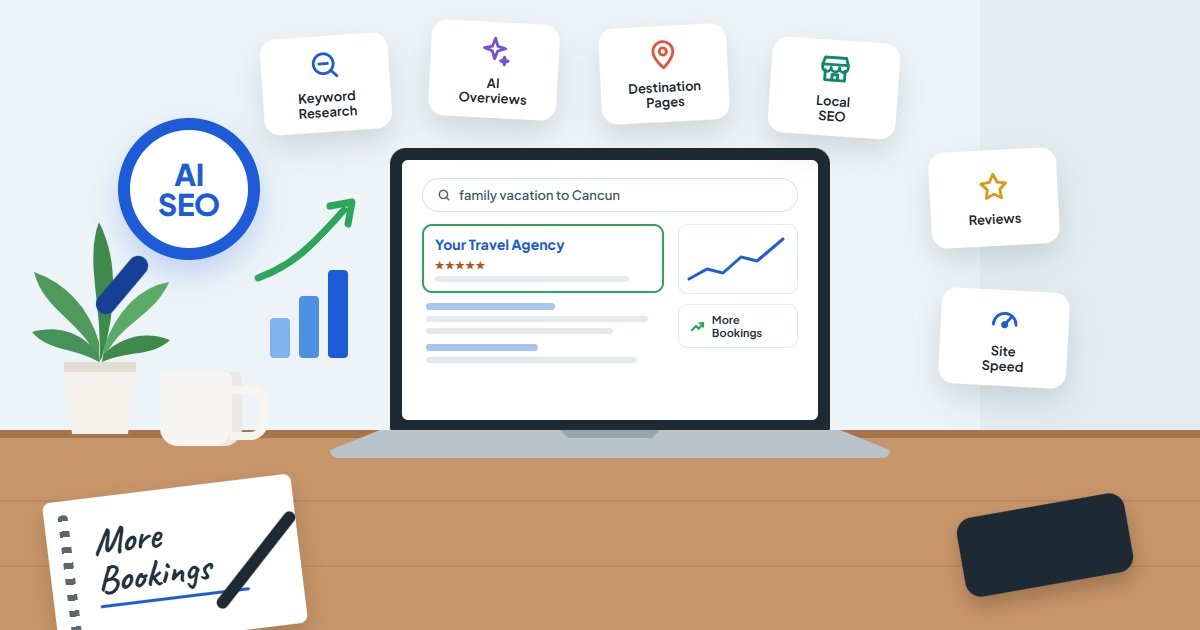
What Is AI SEO for Travel Agencies?
AI SEO means two things working together:
- Using AI tools to do SEO faster and smarter. AI can help you find keywords, plan content, write first drafts, analyze competitors, and spot technical problems on your website.
- Optimizing your website for AI-powered search. Google now shows AI Overviews at the top of many results, and more travelers are using tools like ChatGPT, Gemini, and Perplexity to plan trips. AI SEO helps your agency show up in these answers, not just in the classic list of blue links.
Why AI SEO Matters for Travel Agencies Right Now
Travel is one of the most competitive industries online. Big booking platforms dominate many general searches like “cheap flights” or “hotels in Paris.” Trying to beat them head-on is hard.
But travel agencies have something those platforms don’t: real expertise, personal service, and specialized trips. AI SEO helps you highlight those strengths and win the searches where you can actually compete, such as:
- Specific destinations and experiences (“honeymoon packages in Bali”)
- Niche travel styles (“accessible tours for seniors in Europe”)
- Local searches (“travel agency near me” or “travel agent in Houston”)
- Questions travelers ask before booking (“best time to visit Iceland for the Northern Lights”)
These searches often come from people who are closer to booking, which means more qualified leads for your agency.
10 AI SEO Strategies to Get More Travel Bookings From Google
1. Use AI for Smarter Keyword Research
Keyword research shows you exactly what travelers type into Google. AI tools make it faster to find long-tail keywords, the specific phrases that are easier to rank for and more likely to lead to bookings.
How to do it:
- Ask an AI tool to brainstorm questions travelers ask about your top destinations.
- Check search volume and competition with tools like Google Keyword Planner, Semrush, or Ahrefs.
- Focus on phrases with clear intent, such as “all-inclusive family vacation packages to Jamaica.”
2. Build Strong Destination Pages
Destination pages are often the heart of a travel agency website. A page that simply lists a few hotels won’t stand out. A complete, helpful guide will.
How to do it:
- Create one detailed page for each key destination you sell.
- Include the best time to visit, top experiences, travel tips, sample itineraries, and your available packages.
- Use AI to draft an outline, then add your team’s first-hand knowledge and photos.
3. Optimize Your Tour and Package Pages
Your package pages are where bookings actually happen, so they need to be clear and persuasive.
How to do it:
- Write a unique description for every package. Avoid copying supplier text that appears on dozens of other websites.
- Clearly list what’s included, pricing, dates, and who the trip is best for.
- Add strong calls to action like “Request a Quote” or “Book Your Trip.”
4. Publish Helpful Travel Blog Content
A travel blog helps you rank for the questions people ask while planning. It also builds trust long before someone is ready to book.
How to do it:
- Use AI to plan a content calendar around seasonal trips, holidays, and popular destinations.
- Write practical posts such as packing lists, budget guides, visa tips, and itinerary ideas.
- Link each blog post to a related destination or package page.
5. Win Local Searches With Google Business Profile
Many travelers still prefer working with a local agent they can trust. Your Google Business Profile helps you appear in local results and on Google Maps.
How to do it:
- Complete every section of your profile, including services, hours, photos, and website link.
- Post updates and special offers regularly. AI can help you write these quickly.
- Make sure your business name, address, and phone number match everywhere online.
6. Collect and Respond to Reviews
Reviews influence both Google rankings and traveler decisions. A steady stream of positive reviews tells everyone that your agency is trustworthy.
How to do it:
- Ask happy travelers for a review after every trip, with a direct link to make it easy.
- Reply to every review, positive or negative, in a professional and friendly way.
- Use AI to help draft thoughtful replies, then personalize them before posting.
7. Add Schema Markup
Schema markup is code that helps search engines understand your content, such as your business details, reviews, tours, and FAQs. It can help your pages appear with richer details in search results.
How to do it:
- Add relevant schema types like LocalBusiness, TravelAgency, FAQPage, and Product or Offer for packages.
- Use a plugin like Yoast or Rank Math if your site runs on WordPress.
- Test your markup with Google’s Rich Results Test.
8. Optimize for Google AI Overviews and AI Search
AI search tools pull answers from clear, trustworthy content. If your pages answer travel questions directly, they have a better chance of being cited.
How to do it:
- Start key sections with a short, direct answer, then add details.
- Use question-based headings, like “When Is the Best Time to Visit Greece?”
- Add an FAQ section to your destination and package pages.
- Show real expertise with author bios, client stories, and first-hand travel tips.
9. Make Your Website Fast and Mobile-Friendly
Many travelers browse trips on their phones. A slow or hard-to-use website sends visitors away and can hurt your rankings.
How to do it:
- Compress large travel photos without losing quality.
- Check your site in Google PageSpeed Insights and fix the main issues it reports.
- Make booking and inquiry forms short and easy to use on mobile.
10. Track Results and Improve With AI
SEO isn’t a one-time task. Tracking your results shows you what’s working and where to focus next.
How to do it:
- Use Google Search Console to see which searches bring visitors to your site.
- Use Google Analytics to track inquiries and bookings from organic search.
- Ask AI tools to help summarize your data and suggest pages to update.
Helpful AI Tools for Travel Agency SEO
You don’t need dozens of tools to get started. Here are some popular options and what they’re useful for:
| Tool | Best For |
|---|---|
| ChatGPT, Claude, or Gemini | Brainstorming topics, outlining pages, drafting content, and writing review replies |
| Google Keyword Planner | Free keyword ideas and search volume estimates |
| Semrush or Ahrefs | In-depth keyword research, competitor analysis, and rank tracking |
| Surfer SEO | Optimizing content structure and keyword usage |
| Google Search Console | Seeing which searches bring visitors and spotting indexing issues |
| Google PageSpeed Insights | Checking site speed and mobile performance |
| Canva | Creating visuals for blog posts, social media, and Google Business Profile updates |
Tip: Start with the free tools, then add paid ones as your SEO efforts grow.
Common AI SEO Mistakes Travel Agencies Should Avoid
AI is a powerful helper, but using it the wrong way can hurt your rankings and your reputation. Watch out for these common mistakes:
- Publishing unedited AI content. Generic, robotic text doesn’t build trust or stand out. Always review, fact-check, and add your own experience.
- Sharing outdated or incorrect travel information. AI tools can get visa rules, prices, or opening hours wrong. Double-check important details before publishing.
- Copying supplier descriptions. Duplicate content gives Google no reason to rank your page over others. Write unique descriptions for your packages.
- Ignoring local SEO. Many agencies focus only on blog content and forget their Google Business Profile, which is often the fastest way to get local leads.
- Chasing only high-volume keywords. Broad terms are dominated by big booking sites. Specific, niche keywords usually bring better results.
- Not tracking results. Without data, you can’t tell what’s bringing bookings. Check your results at least once a month.
Frequently Asked Questions
What is AI SEO for travel agencies?
AI SEO for travel agencies means using AI tools to improve your search engine optimization and making your website easier for AI-powered search tools, like Google AI Overviews and ChatGPT, to understand and recommend.
Can a small travel agency compete with big booking sites on Google?
Yes. Small agencies usually can’t win broad searches like “cheap hotels,” but they can rank well for specific destinations, niche trips, local searches, and detailed travel questions, which often bring more qualified leads.
How long does SEO take to bring travel bookings?
Most travel agencies start seeing meaningful SEO results within three to six months. Results depend on your competition, your website’s current condition, and how consistently you publish and improve content.
Is AI-written content bad for SEO?
Not by itself. Google focuses on whether content is helpful, accurate, and trustworthy, not on how it was created. AI-assisted content works best when a travel expert reviews it and adds real experience.
How can my travel agency show up in Google AI Overviews?
Answer travel questions clearly and directly, use question-based headings, add FAQ sections, keep information up to date, and show your expertise with real stories and author details.
Should I hire an agency for travel SEO or do it myself?
You can handle the basics yourself with the steps in this guide. If you’re short on time or want faster, more consistent results, working with an experienced SEO team can help you grow without pulling you away from your clients.
Turn Google Searches Into Travel Bookings
Travelers are already searching for the trips you sell. AI SEO helps make sure they find your agency instead of a competitor. By targeting the right keywords, building helpful destination and package pages, strengthening your local presence, and optimizing for AI-powered search, you can steadily grow your bookings from Google.
Start with one or two strategies from this guide, track your results, and keep improving. Small, consistent steps add up to big results over time.
Ready to grow your travel agency with AI SEO? At Anexplore Digital, we help travel businesses get found online with AI-powered SEO, content, and digital marketing strategies built to bring in real bookings. Contact Anexplore Digital today to get started.